Under contract and on a clock? Call 516-330-3870 Text Email

Inspect This Home Inspections Army Veteran Owned · NY Licensed
Nassau County · South Shore

Home inspector in Massapequa, NY

Between 2015 and 2025, Lou Rubino inspected 23 homes across Massapequa and Massapequa Park. The two are different places on paper — one a hamlet, one an incorporated village — but they share the same post-war housing and the same questions: what is under the floor, what is in the attic, and how close is the water.

Rated 5.0 on Google as of August 2026 · U.S. Army veteran owned · NY licence #16000039568 · 516-330-3870

Two Massapequas, one set of questions

North of Merrick Road the houses are mostly inland capes, splits and high-ranches; south of it the streets run down to canals, and flood zone, bulkheads and post-Sandy work enter the conversation. The inspection is the same licensed scope either way — what changes is where the risk concentrates.

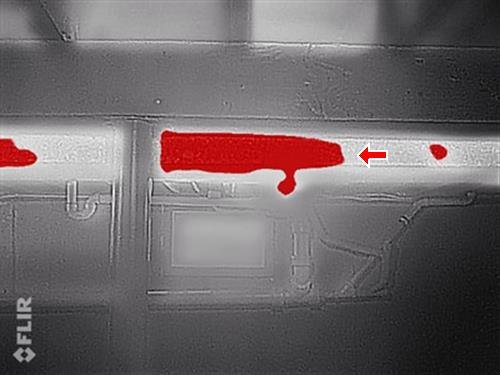
Heating is worth singling out here. Plenty of these houses run hot-water heat, and some still carry loops from their first system. A thermal camera shows what the floor and walls are actually doing — which pipes are live, where the heat goes, and where it leaks — without opening anything.

Related: What sits under a post-war slab · Buying on a flood-zone block · What an inspection costs.
What the inspection can examine here

  • Heating loops under the floor — the thermal camera shows which runs are live and where they lose heat.
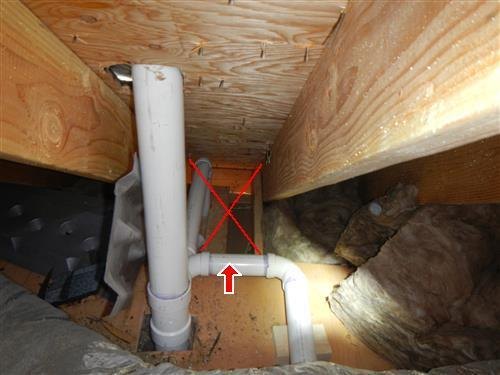
  • The crawlspace, where there is one — drain work like the crossed-out fitting below is invisible from every finished room.
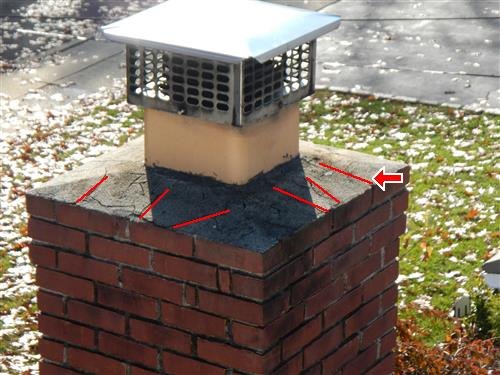
  • Chimney crowns and flashing — the cheap part that lets water reach the expensive parts.
  • Flood exposure south of Merrick Road — zones and elevation are their own subject.

Photographs from Massapequa reports

A thermal-camera image with the hot heating pipe showing as a bright red streak across the frame.
Lou's thermal camera tracing a live hot-water heating line through a Massapequa house — the bright run is the pipe, seen without opening a wall or a floor.
A brick chimney with a screened cap, its cracked concrete crown marked with red lines.
A Massapequa chimney crown with its cracks marked. The crown is the cheap part; what the cracks let in reaches the parts that are not.
PVC drain piping in a crawlspace with an improper fitting marked with a red X.
A drain fitting crossed out in a Massapequa crawlspace — work that no walk-through would ever surface.

All three photographs are from Lou's own Massapequa inspection reports, chosen because they show a building component and nothing that identifies a property or an owner.

From the Massapequa files

More of what Lou has actually photographed and flagged on Massapequa inspections. Open any note to learn what the finding means for a buyer — every link stays on this site.

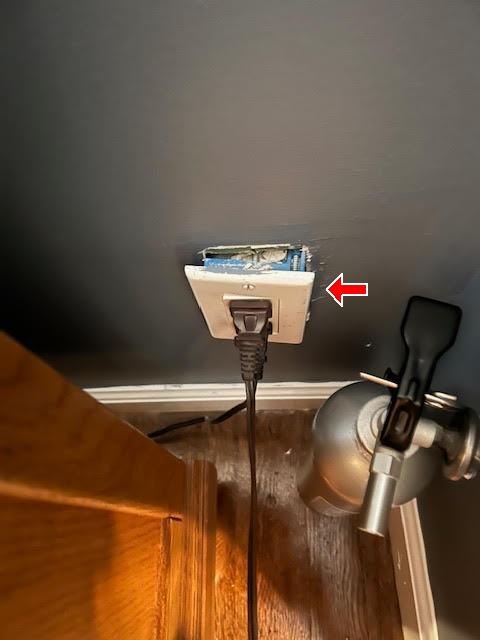
Red arrow at an outlet cover pulled away from a damaged wall opening, cord plugged in
The arrow marks a receptacle sitting loose in an oversized, damaged wall opening while still in use. A loose outlet can strain its wiring connections, so it gets flagged for proper resecuring.
What this means: older wiring

Old wiring is not automatically a defect — it is a question of condition, capacity and what was added to it over the decades. The report describes what era of wiring is present and where it needs a closer look. Old wiring and panels, explained.

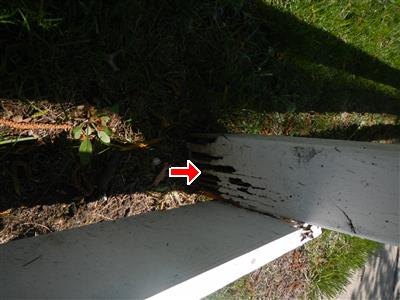
Red arrow at a dark decayed section of white-painted wood board at ground level
The arrow marks decayed wood in a painted board sitting in ground contact. Wood touching soil stays damp, so these spots are standard inspection points for rot and insect damage.
What this means: the exterior envelope

Siding, trim, masonry and parged walls are the building's raincoat, and cracks or failed mortar can give water a way in. The report documents their location and pattern so the right contractor or specialist can evaluate them when warranted. Where water gets in, explained.

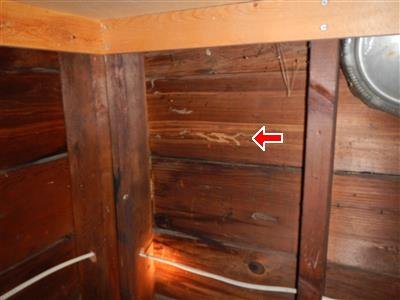
Red arrow at winding light-colored channels on dark wood plank framing
The arrow marks winding surface channels on wood board framing. Patterns like this are flagged for evaluation as possible past or present insect activity in the wood.
What this means: termite evidence

Subterranean termites travel in mud tubes they build themselves — the tubes are the visible evidence, and finding them during an inspection instead of a renovation is worth the entire fee. Termite inspection is part of the conversation when you book.

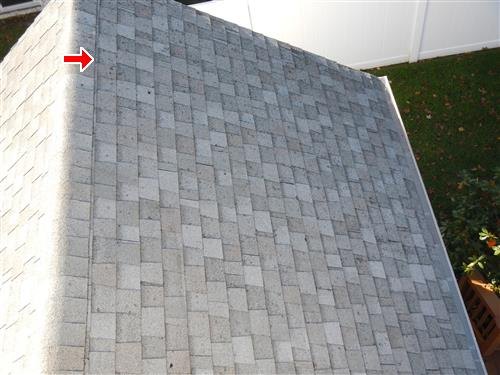
Gray asphalt shingle roof slope viewed from above, red arrow near the ridge
An asphalt shingle roof viewed from above, with the arrow near the ridge area. The scattered dark spots across the slope are patches where surface granules are worn away, which inspectors track as a sign of shingle wear.
What this means: roof wear

Asphalt and slate-type roofs age in legible stages: curling, cracking, slipped pieces, exposed fasteners. Reading the stage helps establish the visible wear and whether maintenance, repair or further evaluation is the honest next step. The report must say how the roof was examined.

All photographs are from Lou's own inspection reports for jobs in this area, screened so nothing identifies a property or an owner.

Approximate town-centre locator — Massapequa in red, Lou’s Wantagh base in navy. Not a job location, an office, or a service boundary.

Where this sits in Lou's territory

Lou covers Long Island, the five boroughs and Westchester from his base in Wantagh, and the archive behind these pages shows where that work has actually concentrated.

Also nearby: Wantagh · Bellmore · West Islip · all 26 towns.

Call Lou Text