Under contract and on a clock? Call 516-330-3870 Text Email

Inspect This Home Inspections Army Veteran Owned · NY Licensed
Nassau County · the barrier island

Home inspector in Long Beach, NY

Between 2015 and 2022, Lou Rubino inspected 8 homes in Long Beach. A barrier island is its own category: West End bungalows shoulder to shoulder, 1920s stucco houses with clay tile roofs, and, since Sandy, a growing share of homes lifted onto pilings — three different buildings with three different failure modes, sometimes on one street.

Rated 5.0 on Google as of August 2026 · U.S. Army veteran owned · NY licence #16000039568 · 516-330-3870

Every Long Beach house answers to the ocean

The 1920s stock came with materials chosen for looks as much as weather, and a century of salt air has had opinions about both. Clay tile sheds water beautifully until one cracked course lets it in; stucco holds paint over problems. On the older houses Lou reads the skins slowly, because that is where the island writes its history.

Elevation changed the rest. A lifted house moved its structure onto new supports and its utilities somewhere the flood cannot reach — in the best cases. Which parts were redone, which were reused, and how the two meet is precisely the kind of question a licensed inspection exists to answer. For the flood-zone mechanics themselves — zones, elevation certificates, drainage — see the Long Beach & Island Park flood page.

Related: The flood-zone mechanics, explained · What an inspection costs · Schedule an inspection.
What the inspection can examine here

  • Roof skins — clay tile and its repairs are read course by course, because tile fails one piece at a time.
  • On lifted houses: where new supports meet original structure, and which utilities moved up with the house.
  • Ground movement — walks, stoops and slabs on a sand island record what the ground is doing.
  • Salt-air electrics — exterior equipment and aging panels corrode from the terminals inward.

Photographs from Long Beach reports

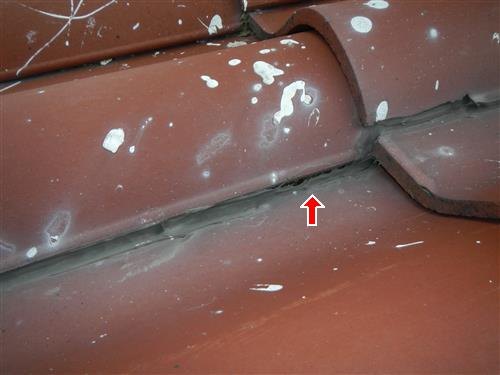
Terracotta clay roof tiles at a ridge, with a mortar patch seam arrowed.
A clay tile ridge on a 1920s Long Beach roof, a patched seam arrowed. Tile outlives everything except its own repairs.
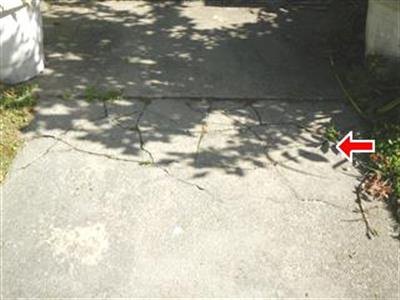
A concrete walkway with settlement cracks running through it, one crack arrowed.
A settled, cracked walkway at a Long Beach home — on a sand island, what the ground is doing is always part of the report.
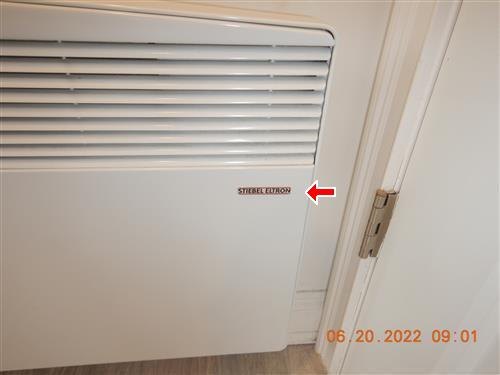
A wall-mounted electric convector heater beside a door frame, with an arrow at its data label.
An electric wall convector in a Long Beach home — heating choices differ on the island, and each kind gets its own checks.

All three photographs are from Lou's own Long Beach inspection reports, chosen because they show a building component and nothing that identifies a property or an owner.

From the Long Beach files

More of what Lou has actually photographed and flagged on Long Beach inspections. Open any note to learn what the finding means for a buyer — every link stays on this site.

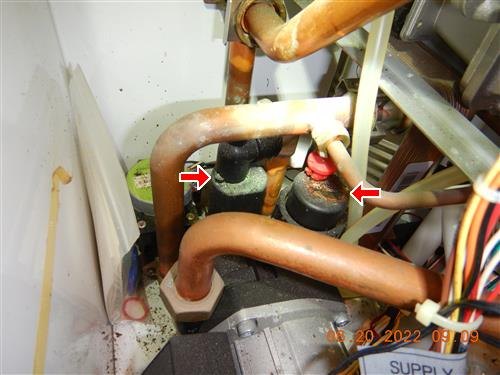
Copper pipes and two circulator pumps with corrosion residue, marked by red arrows
Red arrows mark corrosion residue at the circulator pump connections on a heating system. Buildup at these joints can indicate past or slow leakage, so they are flagged for service before they get worse.
What this means: the heating plant

A boiler's data plate gives its real age; the burn chamber and the piping around it give its real condition. Both go in the report so replacement budgeting is arithmetic, not argument. What an inspection costs against what it finds.

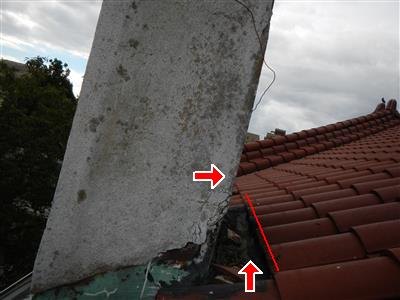
Red arrows at the open joint between a stucco chimney side and a clay tile roof
Arrows mark the junction where the stucco-clad chimney meets the clay tile roof, where the edge is broken open. This joint depends on intact flashing and sealed edges to keep water out of the structure below.
What this means: flashing

Flashing — the metal where a roof meets a wall, a chimney or another roof — is where most leaks actually start. A leak here typically shows up rooms away from its source, which is why the report photographs the source. How moisture problems are traced.

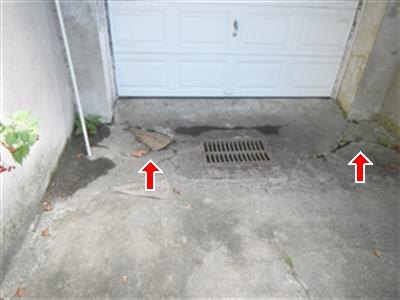
Floor drain grate in cracked concrete apron in front of a white garage door
Red arrows mark cracked, settling concrete around the drain at the garage entry. The drain is positioned to intercept water before it reaches the garage, so the condition of the slab around it gets noted.
What this means: drainage

Managing roof runoff is often one of the most cost-effective maintenance work a house gets — discharge against the foundation raises the risk of moisture problems below. Why drainage decides basements.

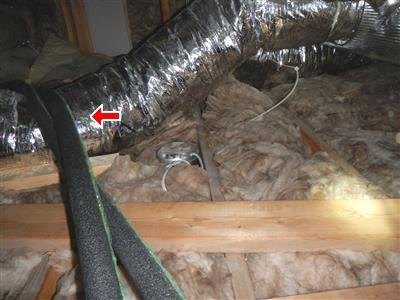
Foil-wrapped flex duct in attic insulation with red arrow, black foam pipe in foreground
The arrow marks a section of insulated flexible air duct running through the attic. Attic ducts are checked for crushed sections, open seams, and secure connections, since damage up here quietly wastes heated and cooled air.
What this means: the attic

Attics record a house's history: leaks the ceilings were painted over, ventilation that was never right, alterations that ended up there. It is usually the highest-value twenty minutes of the inspection. Why being there while Lou works is worth it.

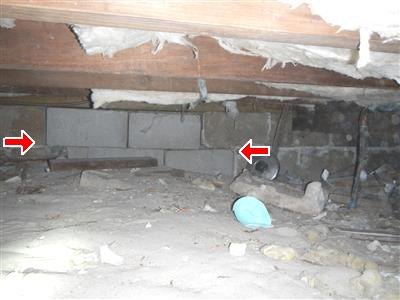
Crawlspace with concrete block supports, fiberglass insulation overhead, red arrows at blockwork
Red arrows mark the concrete block supports under the floor framing in a crawlspace. Crawling these spaces lets an inspector confirm the supports are intact and the framing above is dry.
What this means: the crawlspace

The crawlspace is where the floor structure, plumbing runs and half the wiring actually live — and the part of a house nobody visits between sales. New York requires the report to say what was and was not accessible, and why. The "not observed" rule, explained.

All photographs are from Lou's own inspection reports for jobs in this area, screened so nothing identifies a property or an owner.

Approximate town-centre locator — Long Beach in red, Lou’s Wantagh base in navy. Not a job location, an office, or a service boundary.

Where this sits in Lou's territory

Lou covers Long Island, the five boroughs and Westchester from his base in Wantagh, and the archive behind these pages shows where that work has actually concentrated.

Also nearby: Oceanside · Freeport · all 26 towns.

Call Lou Text