Under contract and on a clock? Call 516-330-3870 Text Email

Inspect This Home Inspections Army Veteran Owned · NY Licensed
Nassau County · Queens border

Home inspector in Floral Park, NY

Between 2014 and 2024, Lou Rubino inspected 8 homes in Floral Park. The village filled out in the 1920s boom with Tudors, Colonial Revivals and capes, and a century later many of them still run on descendants of their original systems — which is exactly what the inspection is for.

Rated 5.0 on Google as of August 2026 · U.S. Army veteran owned · NY licence #16000039568 · 516-330-3870

A century-old village, inspected at its age

Heating plants are the headline here. Lou has opened Floral Park boilers whose combustion chambers were quietly coming apart — something no listing, and no walk-through, will ever show you. The plate says the age; the inside says the truth.

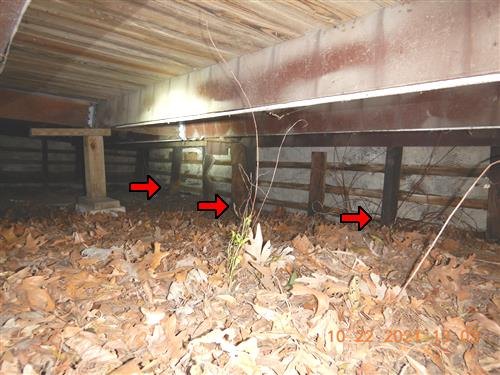
Underneath, many of these houses sit on shallow crawlspaces where the sills and beams have spent a hundred years near the soil. Where the framing meets the foundation is a two-minute look that answers a five-figure question, and it only happens if someone actually goes in.

Related: Old systems, explained · What an inspection costs · Schedule an inspection.
What the inspection can examine here

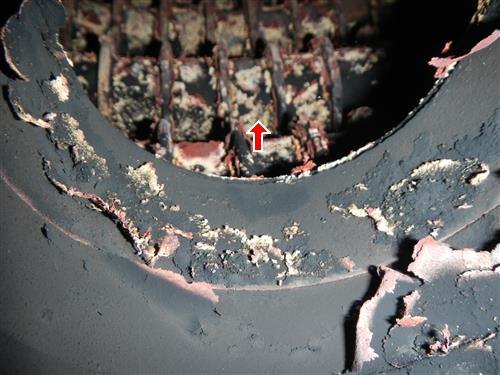
  • Inside the boiler, not just around it — combustion chambers fail invisibly, as the photograph below shows.
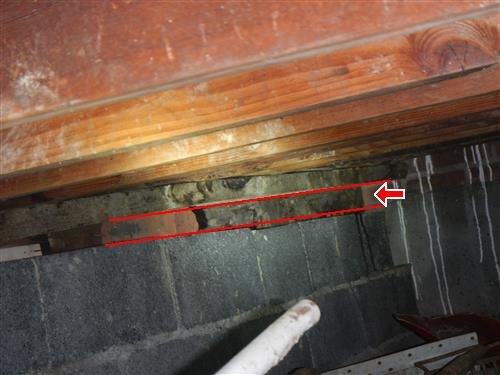
  • The crawlspace and the sills — the oldest joint in a century-old house, and the least visited.
  • The panel and its generations of circuits, covers off, as required.
  • Radon — a separate test worth discussing on houses with crawlspaces and basements alike.

Photographs from Floral Park reports

The inside of a boiler combustion chamber with its lining deteriorating, marked with a red arrow.
Inside a Floral Park boiler: the combustion chamber lining breaking apart, arrowed. From the outside this boiler looked fine.
A crawlspace view of the wood sill over a block foundation wall, a gap traced in red.
A sill gap traced in a Floral Park crawlspace, where the framing meets the foundation — the oldest joint in the house, and the least visited.
A low crawlspace with dry leaves and debris accumulated around wood posts, three arrows marking contact points.
A Floral Park crawlspace with organic debris arrowed against the posts — the two minutes down here answer five-figure questions.

All three photographs are from Lou's own Floral Park inspection reports, chosen because they show a building component and nothing that identifies a property or an owner.

From the Floral Park files

More of what Lou has actually photographed and flagged on Floral Park inspections. Open any note to learn what the finding means for a buyer — every link stays on this site.

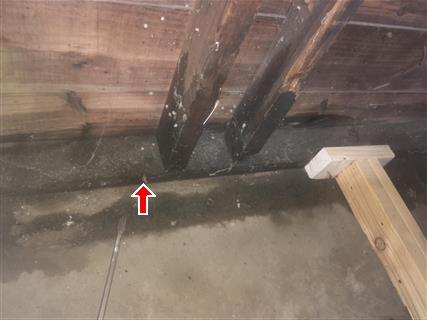
Dark-stained wood framing members meeting a concrete slab, red arrow at stained area near the base
Wood framing with dark staining where it meets the concrete slab; the red arrow marks the stained area at the base. Dark staining on wood near masonry is flagged because it usually indicates the wood has been repeatedly wet.
What this means: interior moisture

Interior staining, failed tile and soft surfaces are the end of a story that started somewhere else. The inspection's job is to find the start — and to say whether the evidence looks active or historical. Water damage and moisture, explained.

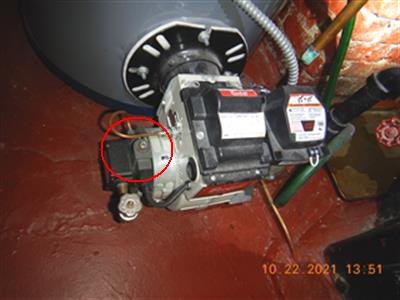
Oil burner assembly mounted on a boiler, red circle around a component, orange date stamp
The burner assembly on an oil-fired boiler, with a red circle marking a component on the burner. Inspectors examine the burner, its controls, and connections as part of testing the heating system.
What this means: the heating plant

A boiler's data plate gives its real age; the burn chamber and the piping around it give its real condition. Both go in the report so replacement budgeting is arithmetic, not argument. What an inspection costs against what it finds.

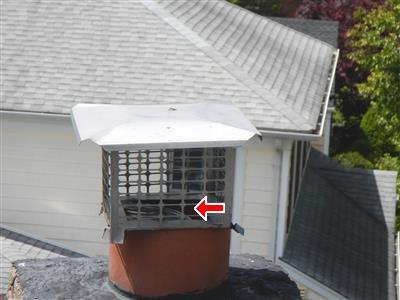
Clay chimney flue with screened metal cap, red arrow pointing at debris inside the screen
A clay flue tile with a screened metal rain cap. The red arrow points at debris caught inside the screen. Caps and screens keep rain and animals out of the flue, and blockages here can affect how the chimney vents.
What this means: the chimney

Chimney crowns, caps and screens are the cheap parts that protect the expensive parts. Cracked crowns and missing screens let water and animals into a flue, and the damage below can run for years unseen. What happens when part of a system cannot be seen.

All photographs are from Lou's own inspection reports for jobs in this area, screened so nothing identifies a property or an owner.

Opens an interactive Google map, right here on this page.

Where this sits in Lou's territory

Lou covers Long Island, the five boroughs and Westchester from his base in Wantagh, and the archive behind these pages shows where that work has actually concentrated.

Also nearby: Bellerose · Valley Stream · all 26 towns.

Call Lou Text