Under contract and on a clock? Call 516-330-3870 Text Email

Inspect This Home Inspections Army Veteran Owned · NY Licensed
Queens · New York City

Home inspection in Queens, NY

Between 2013 and 2026, Lou Rubino inspected more than 60 homes in Queens — Astoria and Flushing most often, Bellerose and Cambria Heights on the Nassau line, with Glendale, East Elmhurst and Forest Hills in the archive as well. Every Queens neighbourhood in his records has a page of its own below — 37 of them, each with the real count; the rest of the borough is a drive from Wantagh, not a scheduled trip.

Rated 5.0 on Google as of August 2026 · U.S. Army veteran owned · NY licence #16000039568 · 516-330-3870

Queens is attached houses, two-families and apartments

Most of the borough's housing is attached or semi-detached — brick and frame rows from the 1920s to the 1950s that share a wall, a roofline and often a drain with the house next door. That changes the inspection. A shared wall means movement, moisture and fire separation behave differently from a free-standing suburban house; a flat or low-slope roof means parapets, flashing and internal drains rather than shingles and gutters; and a fifty-year-old brick facade can hide repointing done in the wrong mortar. New York requires the report to state how the roof was observed, and on a row house that is the first thing worth reading.

The Queens question Lou gets asked most is whether the second unit is legal. A house with a second kitchen may be a legal two-family, a one-family with an illegal conversion, or something in between, and the difference changes what the property is worth and what a lender will do. A home inspection reports condition, not legality — New York is explicit that an inspector may not determine compliance with codes or ordinances (19 NYCRR 197-4.4(d)) — but Lou describes accurately what is there, so that any mismatch with the certificate of occupancy is visible to you and your attorney before closing. In the five boroughs those records sit with the NYC Department of Buildings, not a town hall.

A great deal of Queens is sold as co-ops and condos, and buying an apartment is not buying a house with fewer rooms: the roof, the boiler, the risers and the facade belong to the building, usually cannot be observed during a unit inspection, and have to be listed in the report as not observed, with the reason. That list is the most useful page in a co-op report because it tells you exactly which questions to take to the managing agent and the board minutes. The Queens co-op and condo page goes through it in detail.

Related: Co-ops, condos and two-families · Old wiring behind new renovations · Astoria, with the real count.

What the inspection can examine here

  • Party walls, flat roofs, parapets and internal drains on attached and semi-detached houses — the items a suburban checklist has no line for.
  • Evidence of a second unit and what the house actually contains, described plainly so the certificate of occupancy can be checked against it.
  • The panel, the plumbing eras and the heating plant — covers off, methods stated, as New York requires.
  • In a co-op or condo, exactly what could not be observed and why, so the rest becomes questions for the managing agent.

Hiring a home inspector in Queens, NY

Queens runs under the New York City Construction Codes, and every permit and certificate of occupancy for a house here is held by the NYC Department of Buildings, searchable by address. A home inspection is not a records search. What Lou does is point out the work that usually needed a permit — a finished cellar, a second kitchen, an enclosed porch, a moved panel, a rooftop addition — so your attorney knows exactly what to check against the DOB file before closing.

The visit works the same way across the borough. You call or text 516-330-3870, you are encouraged to be there, and Lou walks the house with you and explains what he finds as he goes. A thermal scan is part of the standard inspection, not an add-on. The written report, with photographs and organised by system, arrives the same day as a rule; a large or complex house can run to the next morning. For an apartment, ask building management before the inspection whether Lou can be let into the roof, the cellar and the boiler room — whatever he cannot reach is listed as not observed, with the reason.

Questions Queens buyers ask

Do you cover all of Queens or only the neighbourhoods listed here?

All of it. Every neighbourhood where Lou’s archive holds a report has a page of its own here, and the borough is covered end to end from his base in Wantagh, on the Nassau line.

Will the home inspection tell me whether the second unit is legal?

No. Legality is a records question, answered against the certificate of occupancy held by the NYC Department of Buildings, usually through your attorney. The inspection describes accurately what is there, including a second kitchen or a separate entrance, so any mismatch is visible before closing.

How soon do I get the report?

The same day, as a rule. A large or complex property can run to the next morning. It is a full written report with photographs, organised by system.
Queens, town by town

Every Queens town and neighbourhood in Lou's own records, each with the real count and its years — one house or twenty. The photographs on each page come from his reports on homes in that town.

Photographs from Queens reports

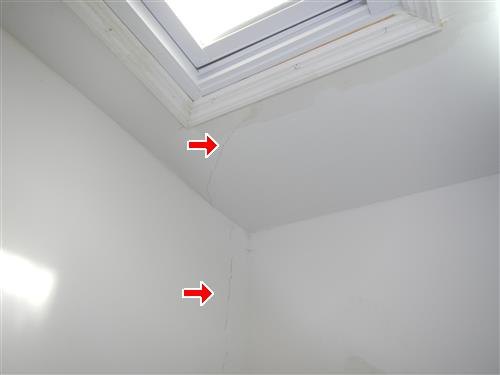
A skylight well in a sloped ceiling with a crack marked by red arrows where it runs into the wall.
Red arrows trace a crack running from the skylight well into the stairwell wall below. The report recommends evaluation and repair by a licensed drywall contractor.
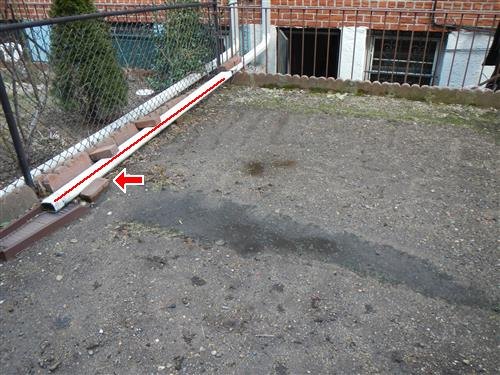
A rear yard with a downspout extension running along the fence line, marked with a red arrow.
A red arrow marks a roof leader discharging into the rear yard along the fence line. The report notes the ground is very muddy and not draining well, and recommends installing a dry well to take the roof water.
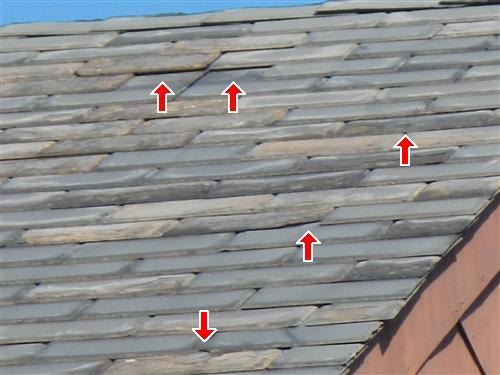
A slate roof with several missing, broken or slipped pieces marked by red arrows.
Red arrows mark slates that are missing, broken or cracked across the middle and lower part of this slope. The report records each damaged area by its location on the roof, so the full extent of the slate damage is documented.

All three photographs are from Lou's own Queens inspection reports, chosen because they show a building component and nothing that identifies a property or an owner.

Where this sits in Lou's territory

Wantagh to Astoria is the Grand Central Parkway on a weekday morning; Bellerose and Cambria Heights sit on the Nassau line and are closer than much of Nassau itself. The archive shows the work spread across the borough rather than clustered, which is what you would expect from a county-line base.

Also: Nassau County · Brooklyn · What an inspection costs · all 250 towns.

Call Lou Text