Under contract and on a clock? Call 516-330-3870 Text Email

Inspect This Home Inspections Army Veteran Owned · NY Licensed
Suffolk County · South Shore

Home inspector in West Islip, NY

Between 2016 and 2024, Lou Rubino inspected 10 homes in West Islip. The hamlet filled in through the 1950s and 60s with capes, ranches and splits — familiar Long Island stock — but crossing into Suffolk changes one thing that Nassau buyers never had to think about: most houses here handle their own wastewater.

Rated 5.0 on Google as of August 2026 · U.S. Army veteran owned · NY licence #16000039568 · 516-330-3870

West Islip adds the Suffolk question

Unlike largely-sewered Nassau, much of Suffolk runs on cesspools and septic systems, and that system is a five-figure component the listing rarely mentions. Age, location, and what the house's plumbing says about it all belong in the buying decision — the septic and well page covers what can and cannot be established during a standard inspection.

The houses themselves age the way sixty-year-old South Shore houses do: eaves and soffits go first where gutters failed quietly, boilers rust from the fittings inward, and additions meet original construction in the attic where nobody looks. That is the actual work of the inspection, and it is why Lou opens every hatch he can reach.

Related: Septic and well, explained · What an inspection costs · Schedule an inspection.
What the inspection can examine here

  • The wastewater question — cesspool or septic, and what can honestly be established during a standard inspection.
  • Eaves, soffits and gutters — sixty-year-old roof edges rot quietly, from the outside in.
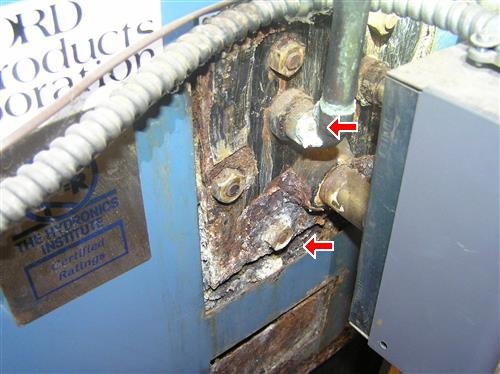
  • The boiler's fittings and jacket — corrosion at the connections is the tell.
  • Alterations where they hide — garages, attics and enclosed porches collect improvised wiring.

Photographs from West Islip reports

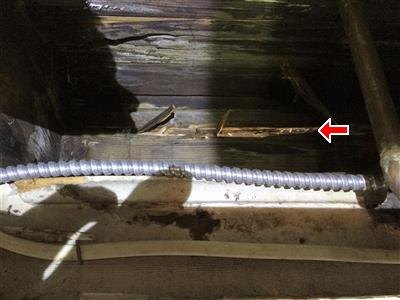
Rotted wood at a roof eave with an armored cable running through it, the damage arrowed.
Rot at the eaves of a West Islip house, arrowed where the roof edge has been letting water past — the gutter failed years before the wood said so.
Heavily corroded pipe fittings on the side of a boiler, two points arrowed.
Corroded fittings on a West Islip boiler, arrowed. Rust at the connections is how a boiler announces the next decade of its life.
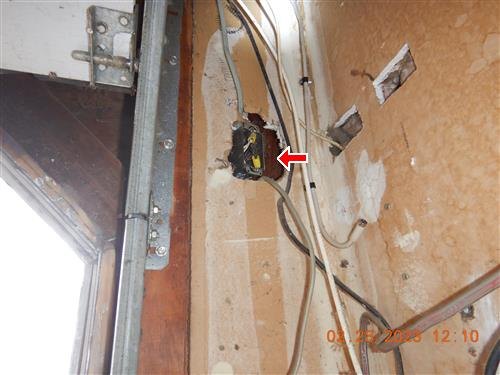
An open wall cavity beside a garage door frame with an exposed junction box arrowed.
An open junction behind a West Islip garage door frame — alterations collect exactly here, where nobody looks.

All three photographs are from Lou's own West Islip inspection reports, chosen because they show a building component and nothing that identifies a property or an owner.

From the West Islip files

More of what Lou has actually photographed and flagged on West Islip inspections. Open any note to learn what the finding means for a buyer — every link stays on this site.

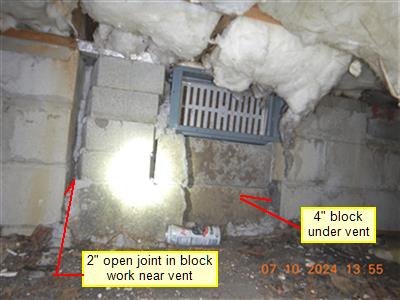
Crawlspace with concrete block piers, a metal vent, insulation overhead, and yellow annotation labels
Inspector labels in a crawlspace point out a two-inch open joint in the block work near a foundation vent and a four-inch block beneath the vent. Gaps and undersized blocks in supporting masonry are documented so a contractor can evaluate them.
What this means: the crawlspace

The crawlspace is where the floor structure, plumbing runs and half the wiring actually live — and the part of a house nobody visits between sales. New York requires the report to say what was and was not accessible, and why. The "not observed" rule, explained.

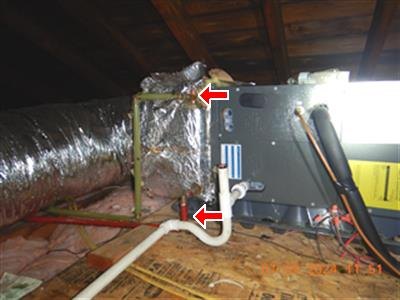
Attic air handler with foil-wrapped duct and white PVC condensate pipe, two red arrows
Red arrows mark the duct connection and the condensate drain piping on an air handler installed in an attic. Inspectors check these points because a loose duct wastes conditioned air and a faulty condensate line can leak onto the ceiling below.
What this means: the heating plant

A boiler's data plate gives its real age; the burn chamber and the piping around it give its real condition. Both go in the report so replacement budgeting is arithmetic, not argument. What an inspection costs against what it finds.

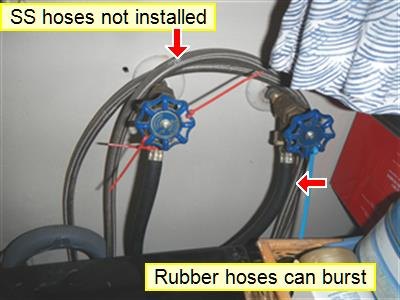
Two laundry shut-off valves with black rubber supply hoses and yellow labels about hose type
Inspector labels note that this washing machine is connected with rubber supply hoses instead of braided stainless steel ones. Rubber hoses are under constant water pressure and can burst, which is a common cause of home flooding.
What this means: supply plumbing

Supply plumbing is judged by material and era — and by the small evidence at the joints. Corrosion and mineral tracks at connections show slow weeping long before a failure. Moisture evidence, explained.

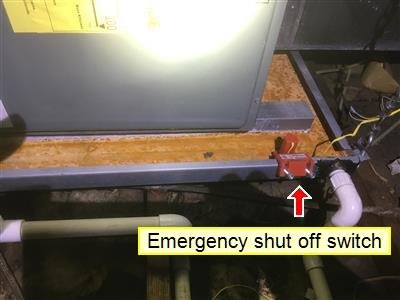
Red emergency shut-off switch mounted beside heating equipment, marked with a red arrow and yellow label
The red arrow and label identify the emergency shut-off switch next to the heating equipment. Knowing where this switch is lets a homeowner cut power to the burner quickly if something goes wrong.
What this means: the heating plant

A boiler's data plate gives its real age; the burn chamber and the piping around it give its real condition. Both go in the report so replacement budgeting is arithmetic, not argument. What an inspection costs against what it finds.

All photographs are from Lou's own inspection reports for jobs in this area, screened so nothing identifies a property or an owner.

Approximate town-centre locator — West Islip in red, Lou’s Wantagh base in navy. Not a job location, an office, or a service boundary.

Where this sits in Lou's territory

Lou covers Long Island, the five boroughs and Westchester from his base in Wantagh, and the archive behind these pages shows where that work has actually concentrated.

Also nearby: Massapequa · Dix Hills · all 26 towns.

Call Lou Text