Under contract and on a clock? Call 516-330-3870 Text Email

Inspect This Home Inspections Army Veteran Owned · NY Licensed
Nassau County · central Nassau

Home inspector in East Meadow, NY

Between 2013 and 2023, Lou Rubino inspected 11 homes in East Meadow. This is inland post-war Nassau — capes, ranches and splits from the same building boom that filled Levittown next door — and the most useful part of the inspection is usually the part of the house nobody shows you.

Rated 5.0 on Google as of August 2026 · U.S. Army veteran owned · NY licence #16000039568 · 516-330-3870

The crawlspace is where East Meadow keeps its secrets

Many of these houses sit on crawlspaces rather than full basements — low, dark, and skipped by everyone except the person being paid to go in. That is where the floor structure, the plumbing runs and half the wiring actually live. Under New York's standards, anything Lou cannot reach must be listed in the report as not observed, with the reason — so either way, you get an honest map of what was seen.

Above the crawlspace, the East Meadow story is the standard post-war one: seventy-year-old houses carrying decades of alterations. The steel columns holding up the main beam, the cast iron stack, the dormered attic — each one is original equipment or someone's later project, and the difference matters.

Related: The post-war slab next door · What New York requires of the report · Schedule an inspection.
What the inspection can examine here

  • The crawlspace, entered where access allows — and documented honestly where it does not.
  • Columns, beams and their connections — the first floor rests on details nobody looks at.
  • Original plumbing stacks — cast iron has a service life, and the report reads where this one is in it.
  • Chimney tops — caps, screens and crowns go first, and they go quietly.

Photographs from East Meadow reports

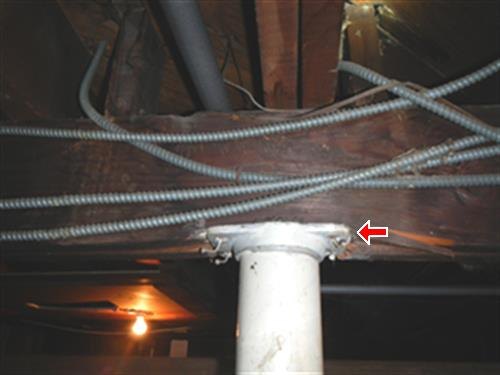
A steel lally column supporting a wood beam in a crawlspace, with armored electrical cables running across the joists.
A steel column meeting the main beam under an East Meadow house, its connection arrowed — the whole first floor rests on details like this one.
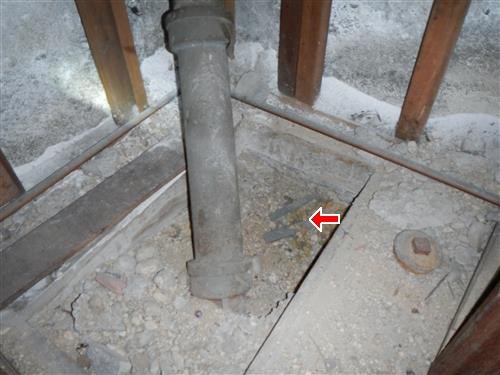
A cast iron plumbing stack rising from a rough unfinished floor, debris around its base arrowed.
A cast iron stack in an unfinished East Meadow corner. Original plumbing is not a defect — but it has a service life, and this is how you read it.
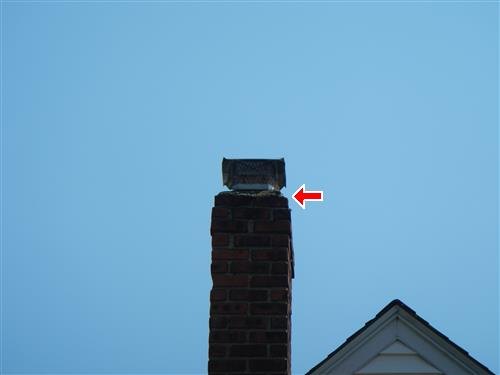
A brick chimney top against a clear sky with an arrow at the cap and screen.
An East Meadow chimney top — the cap and screen are the first things weather takes, and binoculars find it from the ground.

All three photographs are from Lou's own East Meadow inspection reports, chosen because they show a building component and nothing that identifies a property or an owner.

From the East Meadow files

More of what Lou has actually photographed and flagged on East Meadow inspections. Open any note to learn what the finding means for a buyer — every link stays on this site.

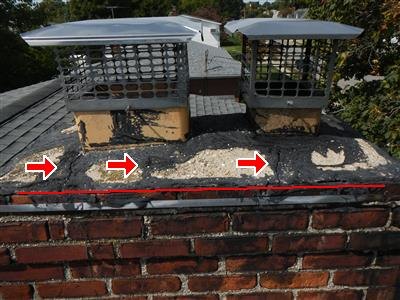
Brick chimney top with two metal flue caps, tarred crown, red arrows and red line markup
The top of a brick chimney with two screened metal caps. The red arrows and line mark the deteriorated cement crown, which has been patched with roofing tar. A failed crown lets water into the chimney structure, so inspectors check it closely.
What this means: the chimney

Chimney crowns, caps and screens are the cheap parts that protect the expensive parts. Cracked crowns and missing screens let water and animals into a flue, and the damage below can run for years unseen. What happens when part of a system cannot be seen.

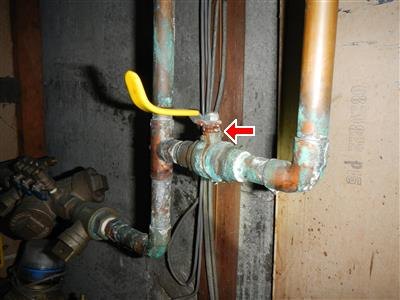
Copper pipes with heavy green corrosion at fittings, yellow valve handle, red arrow at a joint
Copper piping in a basement with green corrosion built up on the fittings. The red arrow marks a corroded valve connection. Surface corrosion like this at joints is noted because it can signal past or slow leaking at the fitting.
What this means: supply plumbing

Supply plumbing is judged by material and era — and by the small evidence at the joints. Corrosion and mineral tracks at connections show slow weeping long before a failure. Moisture evidence, explained.

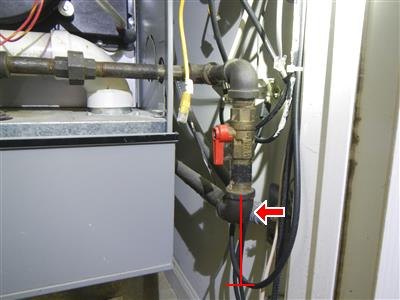
Black iron gas piping with red shutoff valve beside a furnace, red arrow and line at lower pipe
Gas piping at a furnace with a red-handled shutoff valve. The arrow and red line mark the vertical section of pipe below the tee, the drip leg that catches debris before it reaches the appliance. Inspectors confirm the shutoff and piping arrangement at every gas appliance.
What this means: the gas service

Meters, regulators and gas piping are checked visually and, where warranted, with instruments — outdoor equipment in salt air earns a closer look. How a building is metered is also part of what you are buying. The licence behind the inspection.

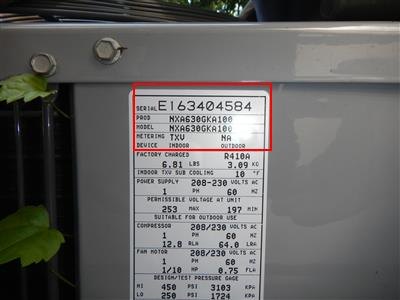
Air conditioner data plate with serial and model numbers outlined in red
The manufacturer data plate on an air-conditioning condenser, with the serial and model numbers boxed in red. The plate tells an inspector the unit's age, refrigerant type, and electrical requirements, which is how equipment age and remaining life are estimated.
What this means: this finding

Every photograph in a report exists to make a finding checkable — the point is not the picture, it is that you and your attorney can see exactly what the inspector saw. Read a complete sample report.

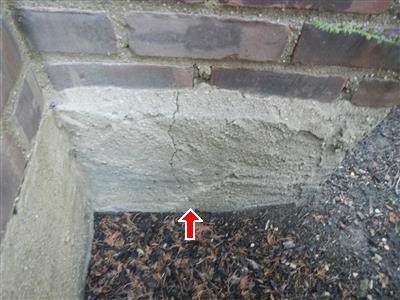
Parged concrete foundation corner below brick, vertical crack, red arrow pointing up at it
A parged foundation wall at an exterior corner, below the brick. The red arrow points to a vertical crack running through the cement coating. Cracks at foundation corners are documented so their size and any movement can be evaluated.
What this means: the structure

Cracks are information: their direction, width and pattern say whether masonry has settled and stopped or is still moving. The report traces them so a later reader can see change. What a condition report does and does not rule on.

All photographs are from Lou's own inspection reports for jobs in this area, screened so nothing identifies a property or an owner.

Opens an interactive Google map, right here on this page.

Where this sits in Lou's territory

Lou covers Long Island, the five boroughs and Westchester from his base in Wantagh, and the archive behind these pages shows where that work has actually concentrated.

Also nearby: Bellmore · Merrick · Wantagh · all 26 towns.

Call Lou Text