Under contract and on a clock? Call 516-330-3870 Text Email

Inspect This Home Inspections Army Veteran Owned · NY Licensed
Water · Long Island, NYC & Westchester

Nearly every expensive thing found in a home inspection started as water

Rot, failed framing, ruined insulation, corroded electrical, a foundation that moved. Follow almost any costly finding backwards and there is water at the start of it, usually arriving somewhere nobody looked for years.

This is core inspection work. Water intrusion, staining, rot and the drainage behind them are exactly what a New York home inspection covers, and Lou brings a moisture meter and a thermal camera to it. Nassau, Suffolk, Queens, Brooklyn, Manhattan and Westchester. The estimate costs nothing. Call 516-330-3870.

The question is never “is there a stain”

It is whether the thing that made the stain is still happening. That single distinction decides whether you are reading a note or a negotiation.

Old and dry

A tidemark on a cellar wall from a storm surge years ago. A ceiling ring under a bathroom that was repiped. These get photographed, described and put in the report as history.

They still matter, because they tell you what this house does under pressure. They are not usually a reason to walk.

Old and still wet

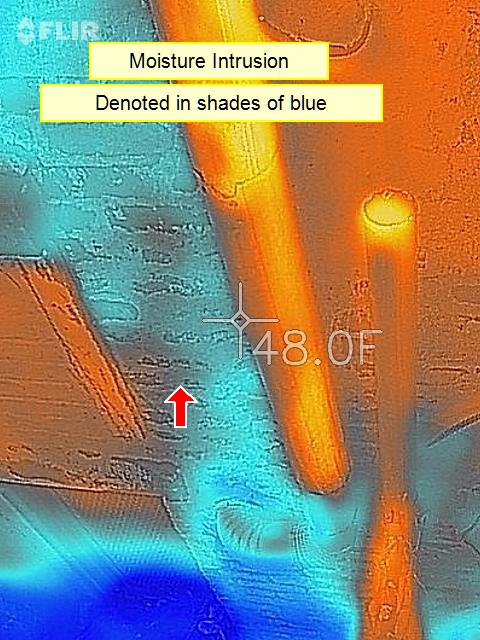
The same stain, but the meter reads high and the thermal camera shows a cold plume spreading beyond the visible mark. Something is still feeding it.

This is the one that changes a purchase. It is also the one you cannot tell apart from the first by looking, which is the entire reason instruments come out.

What actually gets checked

Where water gets in, in the order it usually does

  • Grade and drainage. Ground sloping back toward the house is the most common cause of a wet basement, and the cheapest to fix.
  • Gutters and downspouts. Where they discharge, whether they discharge, and whether the discharge is going straight back against the foundation.
  • The foundation itself. Cracks, efflorescence, tidemarks, previous patching, and whether the patching worked.
  • Roof and flashing. Valleys, penetrations, chimney flashing and the places two roof planes meet.
  • Windows and doors. Sills, sealant, and the wall below them, which is where a bad window shows first.
  • Plumbing and water heater. Supply lines, waste lines, the pan under the heater and the floor around it.
  • Bathrooms. Around and under tubs and showers, and the ceiling of whatever is directly below them.
  • Attic and crawl space. Staining on sheathing, damp insulation, condensation and ventilation that is not working.
A downspout discharging directly at the base of a brick wall rather than being carried away from the foundation.
A downspout emptying at the base of the wall. Everything off that roof is being delivered straight to the foundation, over and over.
A gutter filled with packed debris, marked along its length in the inspection report.
A gutter packed solid. Water that cannot get to the downspout goes over the edge instead, which is how the wall below starts staying wet.
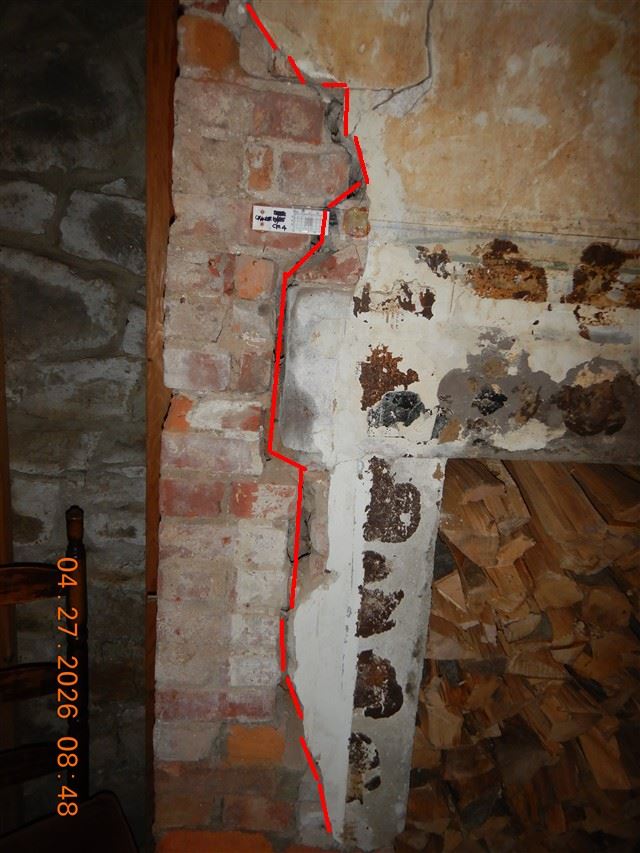
A masonry wall with deteriorated mortar and spalled brick, outlined in the inspection report.
Masonry that has been wet for years. Mortar gone soft, faces coming off the brick. This is what water does when it is given long enough.

On a Long Island slab house the story is usually grade, gutters and bathrooms. On a pre-war house or a Brooklyn brownstone it is more often the roof, the party wall and a cellar that was never meant to be dry. Levitt-era houses and brownstones fail in completely different places.

Two instruments that see what a flashlight cannot

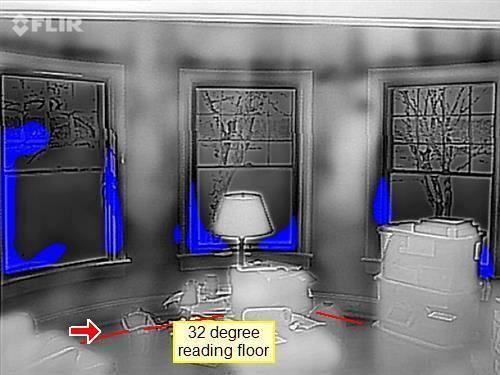
Thermal camera image of a room, with cold areas showing blue beneath three windows and a marked 32 degree reading at floor level.
Thermal camera, from a real inspection. The blue is cold, pooling under the windows and across the floor, with a 32 degree reading marked at the baseboard. That is air and heat loss made visible.
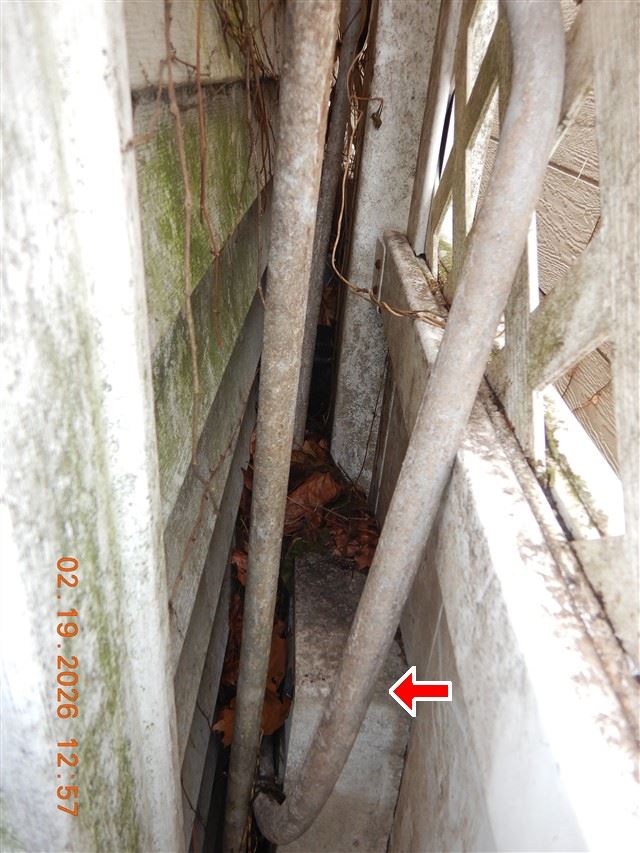
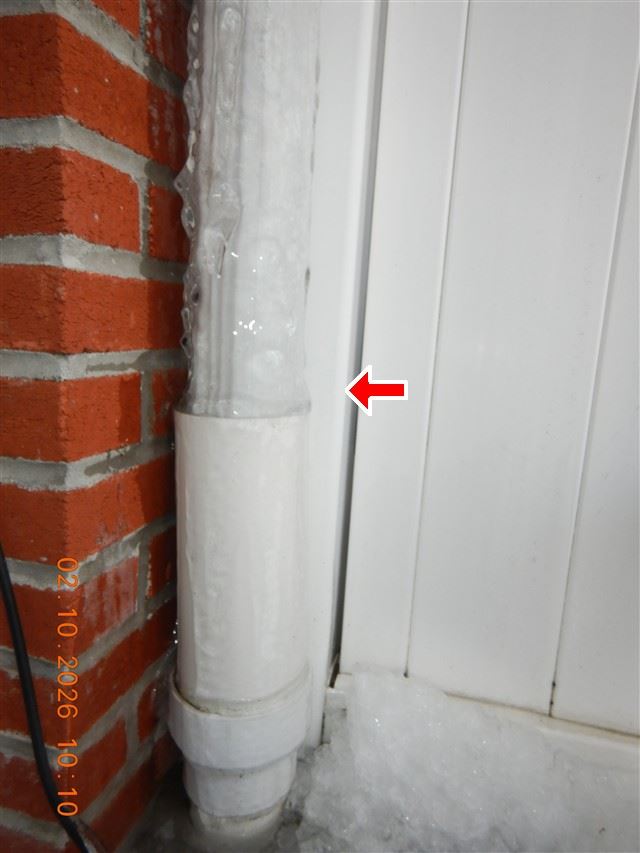
A narrow side passage between two buildings with algae staining on the siding, leaf debris collected at grade, and a corroded pipe marked with an arrow.
A side passage nobody walks down. Algae on the siding, leaves packed at grade and a corroded line at the bottom of it. Chronic damp announces itself if you go and look.

New York does not require a home inspector to carry a moisture meter or a thermal camera. Lou carries both, because the difference between a stain that is finished and a stain that is active is not something the eye can settle, and that difference is worth more to you than anything else in the report.

Neither instrument sees through walls. A thermal camera shows temperature at the surface, and a wet wall is usually a cold wall. It tells him where to put the meter, and the meter tells him whether to be worried.

Where a home inspection stops, and why

New York draws this line, not Lou. The statute that defines a home inspection ends with the sentence “a home inspection shall not include an inspection for radon or pests”, and the standards of practice say an inspector is not required to determine the presence or absence of mold, wood destroying organisms or lead paint.

So what he gives you is the water and the conditions around it: where it is, whether it is active, what is feeding it and what it has already damaged. If you want mold itself assessed and sampled, that is a separately licensed job in New York and it belongs to a licensed mold assessor. Lou will tell you when he thinks you need one.

He takes nothing for that introduction. New York forbids a home inspector being paid for a referral made in connection with an inspection, and that rule is worth knowing about before you hire anybody, because not everyone follows it.

Radon is the other thing excluded by that sentence. It is arranged separately, and the State publishes county by county results that are worth a look before you decide whether you need one.
Short answers

Does an inspection check water damage?

Yes, and it is a large part of the job. Intrusion, staining, rot and the drainage causing them are core scope. Lou uses a moisture meter and a thermal camera alongside the visual inspection.

Does it check for mold?

No. New York excludes it, and the standards say an inspector is not required to determine whether mold is present. Lou reports the water and the damp. Mold assessment is separately licensed, and he takes no fee for pointing you to someone.

What if water damage turns up?

It turns on whether the source is still active. Old staining from a fixed leak is a note. An actively wet foundation wall is a negotiation, sometimes a five-figure one.

Call Lou Text