Under contract and on a clock? Call 516-330-3870 Text Email

Inspect This Home Inspections Army Veteran Owned · NY Licensed
Queens · frame houses and co-ops

Home inspector in Flushing, NY

Between 2015 and 2021, Lou Rubino inspected 11 homes in Flushing. Flushing is one of the oldest settled parts of Queens, and its side streets still carry the frame houses to prove it — often wearing newer siding, newer windows and two or three newer roofs over the original one.

Rated 5.0 on Google as of August 2026 · U.S. Army veteran owned · NY licence #16000039568 · 516-330-3870

In Flushing, the layers are the finding

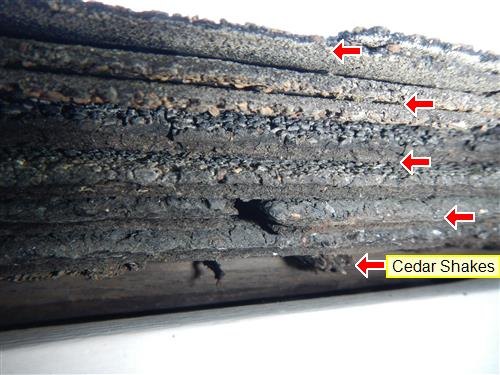
Lou has photographed Flushing roof edges where you can count the history like tree rings: layer over layer of asphalt shingles, all of it riding on the original cedar shakes. Every added layer is weight the framing was never asked to carry and a re-roofing bill that doubles because it now includes a tear-off. You cannot see it from the curb; you can see it at the edge, if you know to look.

The same archaeology applies inside. Panels, wiring and heating in these houses span a century of standards, and the question is never whether the house is old — it is which parts were brought along and which were left behind.

Related: Buying a Flushing co-op instead? · Old wiring, explained · Schedule an inspection.
What the inspection can examine here

  • Roof edges, in section — layer counts change the next re-roofing bill by thousands.
  • The panel and service — older systems carry specific, checkable risks.
  • The frame under the skins — siding generations hide sill and framing questions.
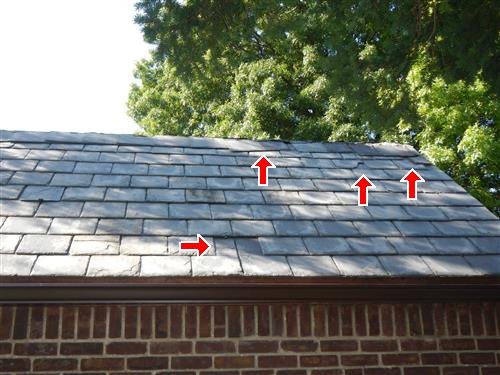
  • Older roofing materials — brittle shingles fail in place and stay put, as the photograph below shows.

Photographs from Flushing reports

A roof edge showing multiple layers of asphalt shingles stacked over cedar shakes, labelled and arrowed.
A Flushing roof edge in cross-section: layers of asphalt shingle over the original cedar shakes, each one arrowed. The next roof here starts with a tear-off.
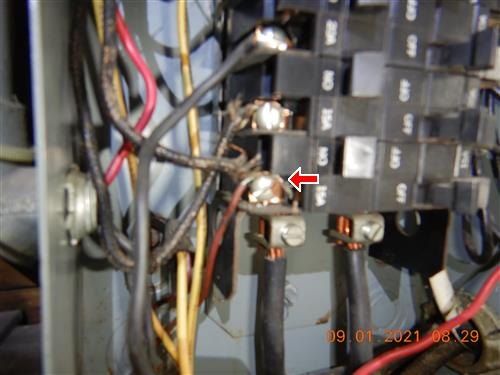
A close view inside an electrical panel showing older conductors and lugs, one connection arrowed.
Inside a Flushing panel — conductors and connections that have outlived several owners, one finding arrowed.
An older grey shingle roof with cracked shingles arrowed beside a dark patched valley.
Cracked shingles arrowed beside a patched valley on an older Flushing roof — brittle materials fail in place and wait.

All three photographs are from Lou's own Flushing inspection reports, chosen because they show a building component and nothing that identifies a property or an owner.

From the Flushing files

More of what Lou has actually photographed and flagged on Flushing inspections. Open any note to learn what the finding means for a buyer — every link stays on this site.

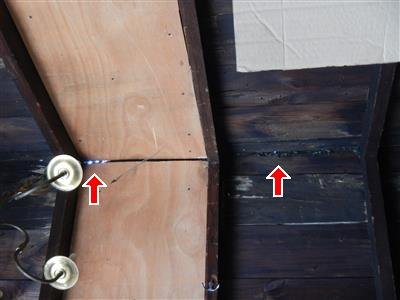
Wood board ceiling and plywood panel with dark staining, two red arrows at stained seams
A wood ceiling where a plywood panel meets older stained boards. The red arrows mark whitish deposits and dark staining along the seams, signs that water has come through here. Staining patterns like this help trace where a leak enters.
What this means: interior moisture

Interior staining, failed tile and soft surfaces are the end of a story that started somewhere else. The inspection's job is to find the start — and to say whether the evidence looks active or historical. Water damage and moisture, explained.

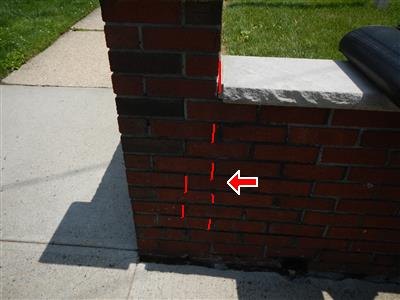
Brick pier of an exterior stoop with mortar joint cracks traced in red, red arrow
The brick side wall of an exterior stoop with cracks in the mortar joints traced in red. Stepped cracking in masonry like this is recorded because it can indicate movement or settlement in the structure below.
What this means: the structure

Cracks are information: their direction, width and pattern say whether masonry has settled and stopped or is still moving. The report traces them so a later reader can see change. What a condition report does and does not rule on.

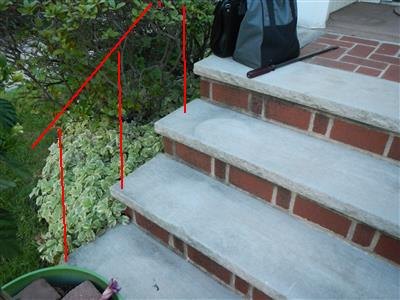
Brick and stone exterior steps with vertical red lines drawn along the open side
Exterior masonry steps with red lines drawn where a handrail should be. Steps with several risers and no railing are a common safety finding, and the markup shows exactly where the rail belongs.
What this means: this finding

Every photograph in a report exists to make a finding checkable — the point is not the picture, it is that you and your attorney can see exactly what the inspector saw. Read a complete sample report.

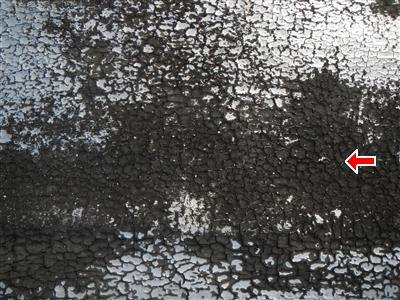
Flat roof surface with cracked, alligatored black coating over silver paint, red arrow
A flat roof where the black asphalt coating has dried and cracked into an alligator pattern; the red arrow marks the worst of it. This weathering means the coating is at the end of its life and the roof needs recoating before it starts to leak.
What this means: the flat roof

A flat roof hides everything from the street: membrane seams, patches, drainage and parapet condition. Patching is normal maintenance — the question a report answers is whether the membrane still has a working life. How roofs are examined and reported.

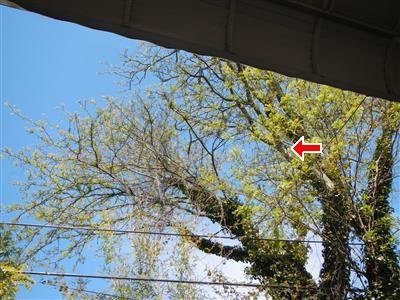
Large tree limbs overhanging a roof edge near utility wires, red arrow at a branch
Tree limbs growing over the roof edge, with the red arrow marking a large branch near the house and its service wires. Overhanging limbs are noted because they drop debris on the roof, hold moisture against it, and can damage wires or shingles in a storm.
What this means: the exterior envelope

Siding, trim, masonry and parged walls are the building's raincoat, and cracks or failed mortar can give water a way in. The report documents their location and pattern so the right contractor or specialist can evaluate them when warranted. Where water gets in, explained.

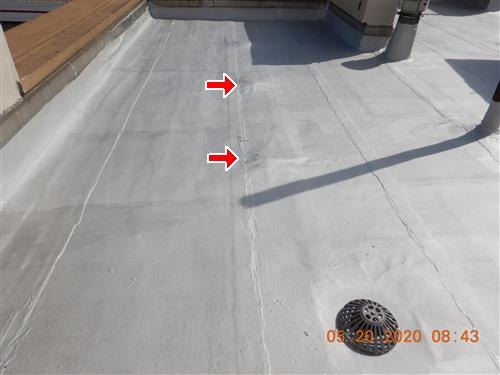
Silver-coated flat roof with a domed drain strainer, two red arrows at a seam, orange date stamp
A silver-coated flat roof with a domed strainer over the roof drain. The red arrows mark a seam in the roofing where the coating shows cracking. On flat roofs the seams and the drains are where problems start, so both get close attention.
What this means: the flat roof

A flat roof hides everything from the street: membrane seams, patches, drainage and parapet condition. Patching is normal maintenance — the question a report answers is whether the membrane still has a working life. How roofs are examined and reported.

All photographs are from Lou's own inspection reports for jobs in this area, screened so nothing identifies a property or an owner.

Approximate town-centre locator — Flushing in red, Lou’s Wantagh base in navy. Not a job location, an office, or a service boundary.

Where this sits in Lou's territory

Lou covers Long Island, the five boroughs and Westchester from his base in Wantagh, and the archive behind these pages shows where that work has actually concentrated.

Also nearby: Astoria · Bellerose · all 26 towns.

Call Lou Text