Under contract and on a clock? Call 516-330-3870 Text Email

Inspect This Home Inspections Army Veteran Owned · NY Licensed
Brooklyn · the brownstone belt

Home inspector in Clinton Hill, NY

Between 2016 and 2026, Lou Rubino inspected 11 homes in Clinton Hill. The neighbourhood's rowhouses hide their most expensive problems in the one place no buyer visits: the roofline, where parapets, coping stones and drainage details spend decades failing quietly before a ceiling ever says so.

Rated 5.0 on Google as of August 2026 · U.S. Army veteran owned · NY licence #16000039568 · 516-330-3870

The roofline is Clinton Hill’s quiet spender

Displaced coping, open mortar joints and painted-over parapet brick all read as trivia from the sidewalk. They are how water gets into the top of a masonry wall — and once inside, it works downward through the house for years on the party-wall side where no one has a window to notice. Lou walks the roof where access allows and reports the wall tops like the structure they are.

Drainage is the other half. A row house sheds its whole roof through a leader or two, and a disconnected or short-changed leader is a foundation problem on a delay timer. It is the cheapest serious finding in the report — when someone looks.

Related: How Lou inspects a brownstone · What an inspection costs · Schedule an inspection.
What the inspection can examine here

  • Wall tops — coping, parapets and the mortar between them, reported as the structure they are.
  • Roof drainage, end to end — a row house sheds its whole roof through a leader or two.
  • Plumbing where it is visible — and honest notes where it is not.
  • The full rowhouse scope — how Lou reads a Brooklyn row house.

Photographs from Clinton Hill reports

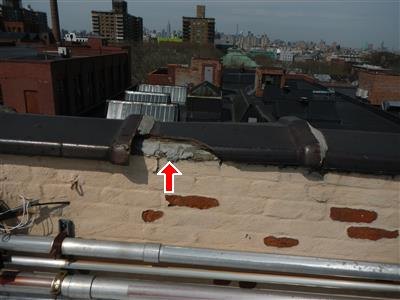
A rooftop parapet with a displaced coping stone arrowed, painted brick spalling below it.
A displaced coping stone on a Clinton Hill parapet, arrowed — from the sidewalk this is invisible; from inside the wall, it is a water main.
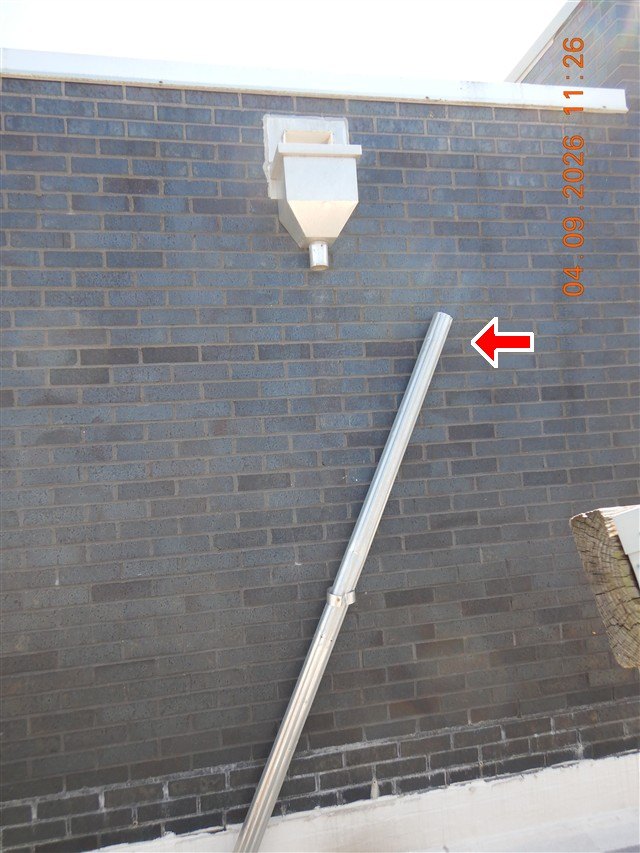
A metal leader pipe leaning disconnected against a dark brick wall beneath its hopper.
A disconnected leader against a Clinton Hill wall. The roof drains through this — or was supposed to.
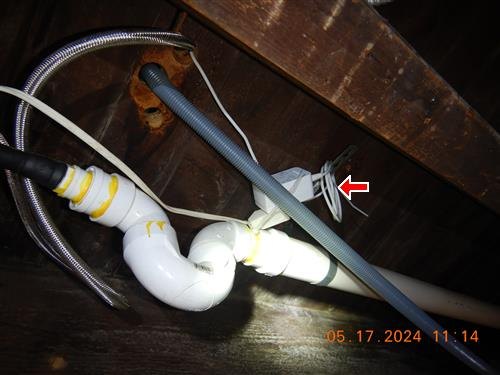
Under-sink plumbing with a flexible corrugated drain line and improvised wiring, one arrow marking the connection.
An improvised under-sink connection in a Clinton Hill kitchen — small, visible, and exactly the kind of thing that predicts the invisible work.

All three photographs are from Lou's own Clinton Hill inspection reports, chosen because they show a building component and nothing that identifies a property or an owner.

From the Clinton Hill files

More of what Lou has actually photographed and flagged on Clinton Hill inspections. Open any note to learn what the finding means for a buyer — every link stays on this site.

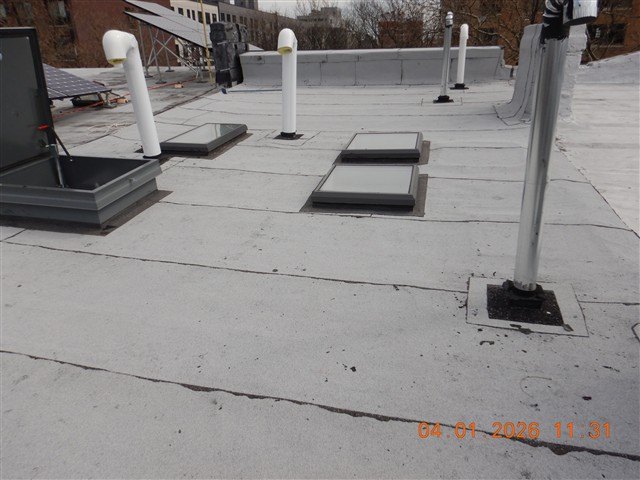
Flat white membrane roof with skylights, a roof hatch, and capped vent pipes, orange date stamp.
A flat roof is inspected across its whole field, including the skylights, plumbing vent pipes, and hatch seen here. Every penetration through the membrane is a place where the waterproofing has to be intact.
What this means: the flat roof

A flat roof hides everything from the street: membrane seams, patches, drainage and parapet condition. Patching is normal maintenance — the question a report answers is whether the membrane still has a working life. How roofs are examined and reported.

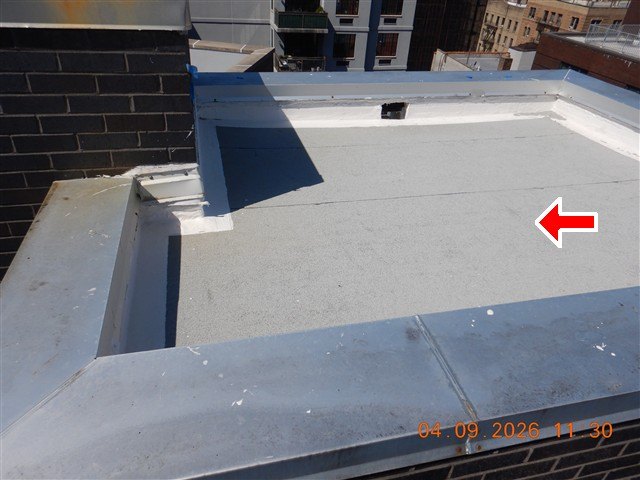
Granular-surfaced flat roof section bordered by metal-capped parapet walls, red arrow, date stamp.
The arrow sits on the field of a small flat roof section enclosed by metal-capped parapet walls, with sealed seams visible at the edges. The junction between roof membrane and parapet is one of the most leak-prone details on this roof type.
What this means: the flat roof

A flat roof hides everything from the street: membrane seams, patches, drainage and parapet condition. Patching is normal maintenance — the question a report answers is whether the membrane still has a working life. How roofs are examined and reported.

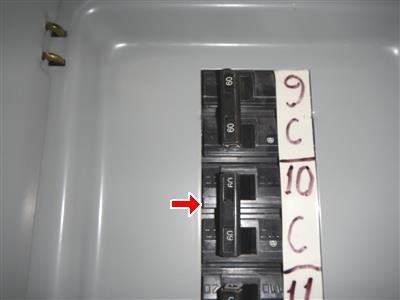
Circuit breakers in an electrical panel with handwritten circuit labels, red arrow at one breaker.
The arrow points to one breaker inside the electrical panel, beside the handwritten circuit numbering. Each breaker is checked for its rating and condition, because a breaker is what protects the wiring on its circuit from overheating.
What this means: the electrical panel

An inspector removes the readily accessible panel covers because New York requires it — most of what matters in a panel is invisible with the cover on. Double-tapped breakers, mixed wire eras and scorched connections are all findings that only appear with the cover off. Why the covers come off.

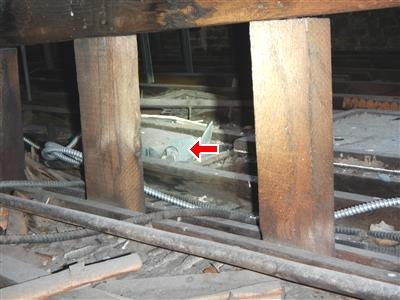
Crawlspace with wood posts, armored cable runs, and a red arrow at a junction box.
In this crawlspace, the arrow marks an electrical junction box among armored cable runs under the floor framing. Junction boxes are checked to confirm connections are enclosed and covered, since exposed splices are a fire hazard.
What this means: the crawlspace

The crawlspace is where the floor structure, plumbing runs and half the wiring actually live — and the part of a house nobody visits between sales. New York requires the report to say what was and was not accessible, and why. The "not observed" rule, explained.

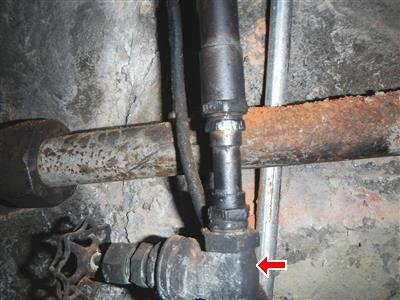
Older steel piping with a valve and fittings against a stone wall, red arrow at one fitting.
The arrow marks a fitting on older steel piping beside a shut-off valve, with heavy surface rust on the horizontal pipe behind. Aged metal piping is examined at its joints, where corrosion tends to concentrate and leaks usually start.
What this means: supply plumbing

Supply plumbing is judged by material and era — and by the small evidence at the joints. Corrosion and mineral tracks at connections show slow weeping long before a failure. Moisture evidence, explained.

All photographs are from Lou's own inspection reports for jobs in this area, screened so nothing identifies a property or an owner.

Opens an interactive Google map, right here on this page.

Where this sits in Lou's territory

Lou covers Long Island, the five boroughs and Westchester from his base in Wantagh, and the archive behind these pages shows where that work has actually concentrated.

Also nearby: Bedford-Stuyvesant · Bushwick · all 26 towns.

Call Lou Text