What does a home inspector look for?
Everything the State's minimum standard names, and the way Lou writes it up is by system. His report has ten sections: roofing, chimneys, roof structure and attic; the exterior, grading and drainage; the garage; the kitchen, appliances and laundry; the interior rooms, windows, stairs and alarms; the bathrooms; the structural components, foundation and signs of water penetration; the plumbing system and water heater; the electrical system, panel, grounding and GFCI protection; and heating and central air conditioning.
Within each system he is looking for condition, not code: what is there, how old it looks, whether it works when run, and where water, heat or electricity is going somewhere it should not. Readily accessible panel covers come off, the roof is observed and the report says how, and anything he could not see is listed with the reason. Thermal imaging is included on every inspection for hidden moisture, insulation gaps and hot electrical connections.
The published sample report is the complete answer: every one of those ten sections, with the findings marked on the photographs and a summary sorted into safety items, cheap fixes, repairs to negotiate and things with a finite life.
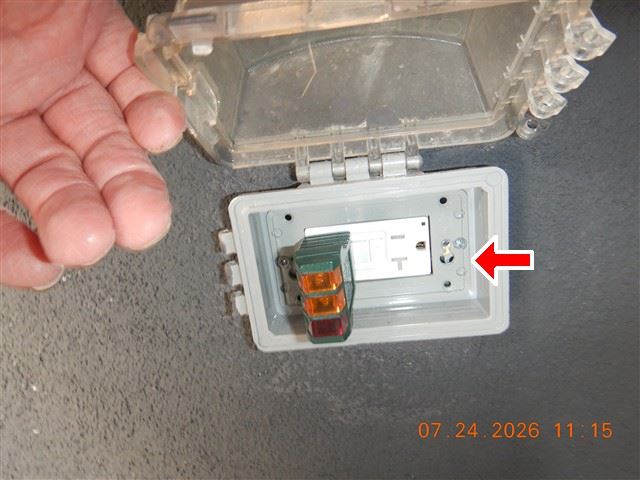
A real photograph from one of Lou’s own inspections, chosen because it shows a building component and nothing that identifies a property or an owner.
Still have a question?
Call, text or email. You get Lou, not a script.
Read the sample report · The buyer's checklist · What New York requires