Under contract and on a clock? Call 516-330-3870 Text Email

Inspect This Home Inspections Army Veteran Owned · NY Licensed
Manhattan · pre-war co-ops and condos

Home inspector on the Upper West Side

Between 2014 and 2026, Lou Rubino inspected 13 apartments on the Upper West Side. Pre-war co-ops and condos are a different kind of purchase: you are buying a home inside a building whose structure, roof and plant belong to the co-op corporation or the condominium, and the inspection's first job is establishing where your responsibility ends and the building's begins — then checking your side of that line properly.

Rated 5.0 on Google as of August 2026 · U.S. Army veteran owned · NY licence #16000039568 · 516-330-3870

An apartment inspection is about the boundary

Inside the unit, the tools are the same ones Lou brings to a house: a thermal camera across the exterior walls and windows picks out the temperature anomalies that point to air leakage, missing insulation or moisture worth investigating further; accessible fixtures and appliances are operated, representative receptacles get the tester — and anything that could not be checked is documented; and the unit's own panel — sometimes a sub-panel fed from floors below — gets opened and read.

What cannot be observed matters just as much, and New York's rules make it explicit: systems that could not be reached must be listed in the report as not observed, with the reasons. In a co-op, that list — risers behind walls, the building plant, the roof ten floors up — becomes your question sheet for the managing agent and your attorney — exactly the questions you want answered before you commit.

Related: Manhattan co-ops and condos, explained · What an inspection costs · Schedule an inspection.
What the inspection can examine here

  • The boundary — what is yours to maintain and what is the building's, established first.
  • The unit's electrical — including sub-panels that may live floors away from the apartment.
  • Everything operable — fixtures and appliances run, representative receptacles tested, limitations documented.
  • The co-op and condo scope in full — what a Manhattan apartment inspection covers.

Photographs from Upper West Side reports

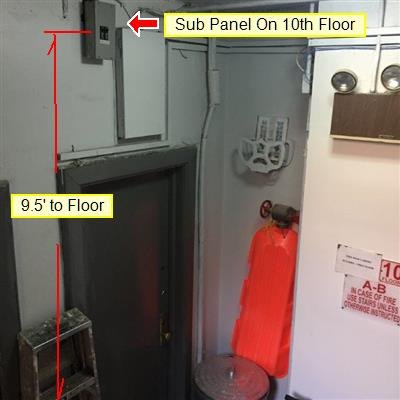
A hallway utility area with a sub-panel labelled as being on the 10th floor, with a measurement annotation.
A sub-panel on the 10th floor, labelled in an Upper West Side inspection — in an apartment, even finding the electrical service is part of the job.
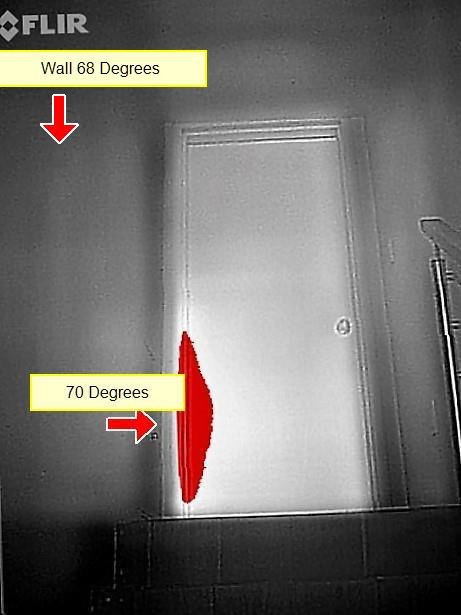
A thermal-camera image of a wall and door with temperature labels showing 68 and 70 degrees.
Thermal imaging across an Upper West Side wall — the camera reads the temperatures the paint hides.
Under-sink brass trap and braided steel supply lines inside a cabinet, one connection arrowed.
A brass trap and braided connections under an Upper West Side sink — the unit's own plumbing, checked joint by joint.

All three photographs are from Lou's own Upper West Side inspection reports, chosen because they show a building component and nothing that identifies a property or an owner.

From the Upper West Side files

More of what Lou has actually photographed and flagged on Upper West Side inspections. Open any note to learn what the finding means for a buyer — every link stays on this site.

Flat roof with ponding water and stains around a mushroom-style vent fan, red arrow at right
Standing water and tide-line stains on a flat roof around a powered vent; the arrow marks the stained area. Ponding is flagged because water that sits after rain ages the membrane faster and finds any weak seam.
What this means: the flat roof

A flat roof hides everything from the street: membrane seams, patches, drainage and parapet condition. Patching is normal maintenance — the question a report answers is whether the membrane still has a working life. How roofs are examined and reported.

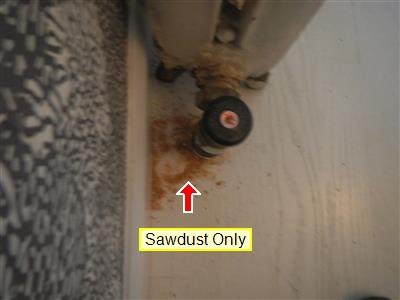
Base of a radiator valve with reddish deposit on the floor, labeled Sawdust Only
The reddish material at the base of this radiator valve looks like a rust or leak stain, but the inspector's note records it as sawdust only. Part of an inspection is confirming what a stain actually is before it is called a leak.
What this means: the heating plant

A boiler's data plate gives its real age; the burn chamber and the piping around it give its real condition. Both go in the report so replacement budgeting is arithmetic, not argument. What an inspection costs against what it finds.

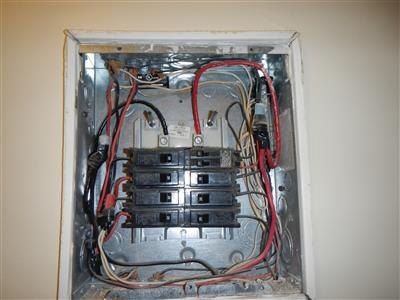
Open electrical panel with cover removed showing circuit breakers and red and black wiring
A panel with its cover removed so the breakers and wire connections can be seen. Inspectors open panels to check for loose connections, scorching, and wiring that does not match its breaker size.
What this means: the electrical panel

An inspector removes the readily accessible panel covers because New York requires it — most of what matters in a panel is invisible with the cover on. Double-tapped breakers, mixed wire eras and scorched connections are all findings that only appear with the cover off. Why the covers come off.

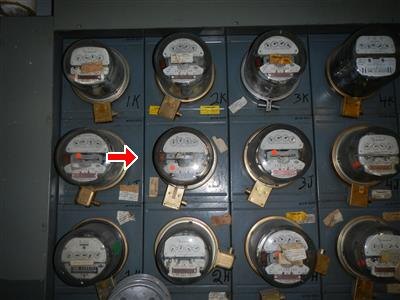
Rows of round glass electric meters on a gray board, red arrow marking one
The meter room in a multi-family building; the arrow marks the meter tied to the unit. Confirming which meter and disconnect serve the apartment is a routine part of the inspection.
What this means: the electrical panel

An inspector removes the readily accessible panel covers because New York requires it — most of what matters in a panel is invisible with the cover on. Double-tapped breakers, mixed wire eras and scorched connections are all findings that only appear with the cover off. Why the covers come off.

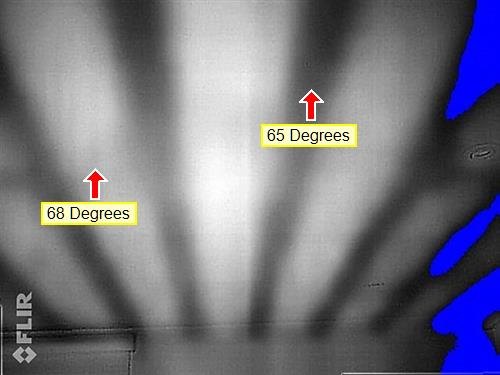
Thermal camera image of a ceiling with dark bands, labels reading 65 and 68 degrees
An infrared image of a ceiling: the darker stripes are cooler lines along the framing, and the labels record spot temperatures a few degrees apart. Thermal imaging shows temperature patterns behind finished surfaces that the eye cannot see.
What this means: thermal imaging

A thermal camera reads surface temperature differences — the starting point for finding air leaks, missing insulation and wet materials that warrant a closer look. It is evidence for further investigation, not a verdict by itself. How thermal evidence gets used.

All photographs are from Lou's own inspection reports for jobs in this area, screened so nothing identifies a property or an owner.

From clients he inspected co-ops and condos for

Quoted from the Google listing. Neither review was written for this page; the marked cut shortens one of them.

Knowledgeable about co-op buildings

“Lou was fantastic. He was thorough, professional, and incredibly knowledgeable about co-op buildings. He explained everything clearly and his report was extremely helpful when making our decision. Highly recommend Lou to anyone buying in a co-op!”
Brennan L.Google · August 2025

A time-sensitive Manhattan condo inspection

“I contacted Lou this week for a time-sensitive request for a condo inspection in Manhattan. Lou was responsive, professional, personable and thorough. … He has experience with condos, gets the sale process and the concerns that purchasers have before buying.”
John L.Google · September 2023
Approximate town-centre locator — Upper West Side in red, Lou’s Wantagh base in navy. Not a job location, an office, or a service boundary.

Where this sits in Lou's territory

Lou crosses into Manhattan regularly from Wantagh — apartments are a scheduled trip, not a favour, and he quotes them individually.

Also nearby: Manhattan co-ops & condos · all 26 towns.

Call Lou Text